Table of Contents
ToggleBlack kitchen cabinets have surged from a niche design choice to a mainstream statement in modern homes. They bring depth, contrast, and an upscale edge that lighter cabinets can’t quite match. But going dark isn’t as simple as slapping on a coat of black paint, finish type, material quality, and how you balance the rest of your kitchen all matter. Whether you’re renovating a dated kitchen or building from scratch, black cabinetry demands intentional planning. This guide walks through the practical considerations, from choosing finishes and hardware to lighting and budget-friendly shortcuts, so you can pull off this bold look without regret.
Key Takeaways
- Modern black kitchen cabinets create visual depth and anchor open-concept spaces while effectively hiding wear, scuffs, and fingerprints better than lighter finishes.
- Finish selection is critical: matte black hides fingerprints but requires gentle cleaning, glossy black reflects light and feels larger but shows smudges easily, and satin finishes offer the best balance for DIY projects.
- Black cabinetry demands intentional lighting design with layered sources (under-cabinet LEDs, recessed lights, and pendant fixtures) to prevent the space from feeling cave-like and to showcase the cabinets effectively.
- Pair black kitchen cabinets with light-colored countertops (white quartz or marble), simple backsplashes, and light flooring to create contrast and prevent a cramped, monochromatic appearance.
- Cabinet painting is the most affordable way to achieve modern black cabinetry for $200–$600, while replacing just cabinet doors or using a two-tone approach (black lowers, white uppers) can cost between $1,500–$4,000.
- Brushed brass, matte gold, and aged bronze hardware complement black cabinets and are trending in 2026, while slab-style doors with soft-close hinges and undermount slides define contemporary design.
Why Modern Black Kitchen Cabinets Are Dominating Interior Design Trends
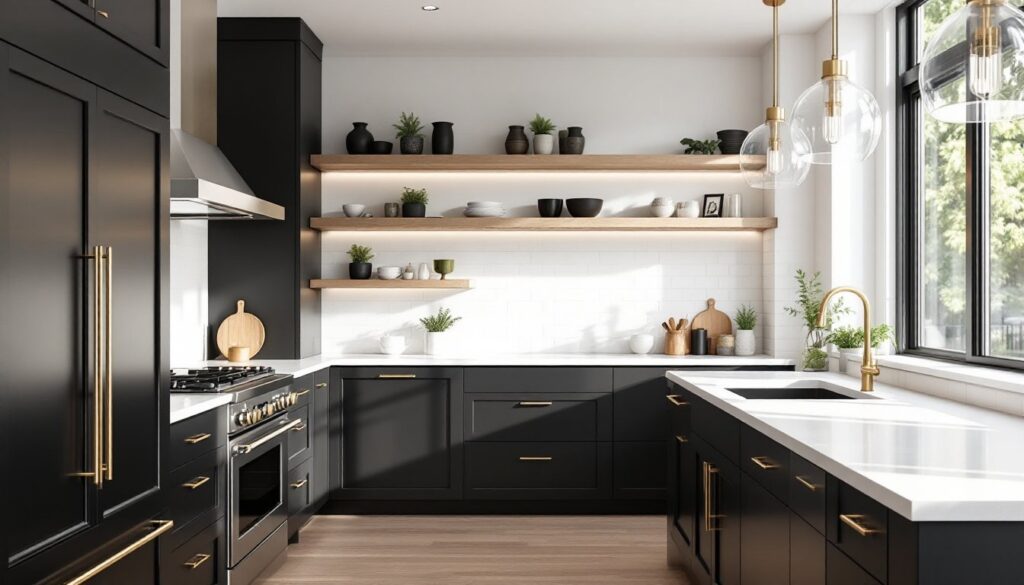
Black cabinets create an anchor in open-concept spaces, defining the kitchen zone without needing a wall. They photograph well, which explains their popularity on social media and design blogs. But beyond aesthetics, black hides minor wear better than white or light wood finishes, scuffs, fingerprints, and splatter marks are less visible.
The modern aesthetic leans toward high contrast and clean lines. Black cabinetry pairs naturally with materials like stainless steel, white quartz, and brass or matte gold hardware, all staples of contemporary design. Unlike traditional dark wood stains, modern black finishes, whether painted MDF, thermofoil, or lacquered plywood, deliver a uniform, saturated color that feels deliberate rather than rustic.
That said, black cabinets aren’t forgiving of poor lighting or cramped layouts. In a small galley kitchen with one window, they can make the space feel cave-like. They work best in kitchens with ample natural light, large square footage, or strategic artificial lighting. If your kitchen lacks these, you’ll need to compensate with reflective surfaces and layered light sources.
Choosing the Right Finish for Your Black Kitchen Cabinets
Finish choice affects durability, maintenance, and visual impact. Not all black finishes perform the same in a working kitchen.
Matte vs. Glossy Black Finishes
Matte black (sometimes called flat or ultra-matte) hides fingerprints and smudges better than gloss, making it popular for high-traffic kitchens. It also diffuses light, which softens the look and prevents glare. The downside? Matte finishes can show moisture spots and grease more readily, and they’re harder to wipe clean, grease tends to embed in the texture. You’ll need a microfiber cloth and a gentle cleaner: abrasive scrubbing can damage the finish.
Glossy or high-gloss black reflects light, making a kitchen feel larger and brighter. It’s easier to clean, grease wipes off smooth surfaces quickly. But every fingerprint, water spot, and dust particle shows up, so expect to clean more often. High-gloss finishes are typically achieved with lacquer or thermofoil over MDF, both of which hold up well to humidity if properly sealed.
Satin or semi-gloss splits the difference. It offers some reflectivity without the constant smudge patrol of full gloss, and it’s easier to maintain than matte. For most DIYers refinishing existing cabinets, a satin finish is the most forgiving.
If you’re painting cabinets yourself, use a high-quality cabinet paint (like Benjamin Moore Advance or Sherwin-Williams Emerald Urethane) and apply with a foam roller or HVLP sprayer for a smooth finish. Sand between coats with 220-grit sandpaper and allow full cure time, typically 7 to 14 days, before heavy use.
Best Materials and Hardware for Modern Black Cabinetry
Cabinet material matters more than color. Plywood is the gold standard for cabinet boxes, stronger and more moisture-resistant than particleboard. MDF (medium-density fiberboard) works well for painted door fronts because it takes paint smoothly and won’t show wood grain. Avoid particleboard for anything but budget-grade installs: it swells when wet and doesn’t hold screws well over time.
For door construction, full-overlay, slab-style doors are the hallmark of modern design. No raised panels, no ornate trim, just flat, smooth fronts. If you’re ordering custom or semi-custom cabinets, specify soft-close hinges and undermount drawer slides. Both reduce wear on the finish and eliminate slamming.
Hardware is where you can inject personality. Brushed brass, matte gold, and aged bronze create warmth against black and are trending hard in 2026. Stainless steel or polished chrome offers a cooler, more industrial look. Matte black hardware is an option, but it can disappear into black doors, use it only if you want a seamless, handle-free appearance. For a true modern vibe, consider integrated pulls (routed into the door edge) or long bar pulls in a contrasting finish.
If you’re retrofitting existing cabinets, measure the center-to-center distance of your current holes before buying new hardware. Standard sizes are 3 inches, 96mm, and 128mm. Drilling new holes is doable but requires a steady hand and a drill guide to avoid misalignment.
Designing a Balanced Kitchen: Pairing Black Cabinets with Countertops and Backsplashes
Black cabinets need contrast to avoid a monochromatic cave. The easiest way to achieve this is with light-colored countertops. White quartz, light gray granite, and marble (or marble-look quartz) are popular choices. Quartz is more forgiving than natural stone, it doesn’t require sealing and resists staining better. Expect to pay $50 to $100 per square foot installed for mid-grade quartz, depending on your region.
For a warmer look, butcher block or light wood countertops add texture and soften the black. Keep in mind that wood requires regular oiling and isn’t ideal near the sink unless you’re diligent about maintenance.
Backsplashes should either blend quietly or make a statement. A white subway tile backsplash is classic and keeps the focus on the cabinets. Large-format porcelain slabs in white or light gray offer a seamless, grout-free look that’s easy to clean. If you want drama, consider a bold geometric tile or a marble slab backsplash that extends to the ceiling. Designers often recommend pairing black cabinets with light countertops to prevent the space from feeling closed in.
Flooring also plays a role. Light oak, white-washed hardwood, or large-format gray tile grounds the space without competing with the cabinets. Avoid black or very dark floors unless your kitchen has exceptional natural light, it creates a bottom-heavy feel.
Lighting Strategies to Make Black Cabinets Shine
Lighting is non-negotiable with black cabinetry. A single overhead fixture won’t cut it. You need layered lighting: task, ambient, and accent.
Start with under-cabinet LED strips. These illuminate countertops for prep work and prevent the underside of upper cabinets from casting shadows. Look for color temperature around 3000K (warm white), anything cooler reads as sterile. Hardwired under-cabinet lights are cleaner, but plug-in LED strips work if you don’t want to open walls. Install them toward the front edge of the cabinet bottom, not the back, to reduce glare on glossy countertops.
Recessed can lights or a track system provides ambient lighting. Space them evenly, typically 4 to 6 feet apart, and aim for 4-inch or 6-inch housings depending on ceiling height. If you’re retrofitting, battery-powered puck lights are an option, but hardwired is always better for long-term reliability.
Pendant lights over an island add style and task lighting. Choose fixtures with clear or white glass shades to maximize light output, or go bold with a brass or gold finish that echoes your hardware. Hang pendants 30 to 36 inches above the countertop to avoid head-bumping but keep light focused.
Finally, don’t underestimate natural light. If your kitchen has windows, skip heavy drapes. Sheer or no window treatments let in maximum daylight. If privacy is a concern, consider frosted film or top-down bottom-up shades.
Budget-Friendly Ways to Achieve the Modern Black Cabinet Look
Full cabinet replacement is expensive, expect $8,000 to $25,000+ for a mid-sized kitchen depending on materials and labor. But you can get the look for less.
Painting existing cabinets is the most cost-effective route. Budget $200 to $600 for quality paint, primer, sandpaper, brushes or a sprayer, and new hardware. It’s labor-intensive, plan on a long weekend or two, but the payoff is substantial. Remove all doors and hardware, clean with TSP (trisodium phosphate), sand lightly, prime with a bonding primer like Zinsser B-I-N, then apply two coats of cabinet paint. Let each coat dry fully.
If your cabinet boxes are solid but the doors are dated, consider replacing just the doors. Companies like Cabinet Doors Depot or Barker Door sell slab-style doors in standard sizes. Measure carefully, width, height, and hinge placement, before ordering. New doors plus hardware can run $1,500 to $4,000 depending on door count and material.
Peel-and-stick cabinet film is another option, though it’s best for renters or temporary updates. Quality vinyl wraps (like d-c-fix or Con-Tact) can mimic matte black, but they won’t hold up to heat near the stove or heavy scrubbing. They’re also tricky to apply without bubbles on large surfaces.
For those seeking kitchen design ideas or broader inspiration, many home design platforms showcase real kitchens with budget breakdowns and material lists. These resources help DIYers visualize how black cabinets fit into different layouts and styles before committing to a full renovation.
Finally, if you’re doing a partial remodel, paint lower cabinets black and leave uppers white or remove them entirely for open shelving. This two-tone approach cuts costs and prevents the space from feeling too dark.