Table of Contents
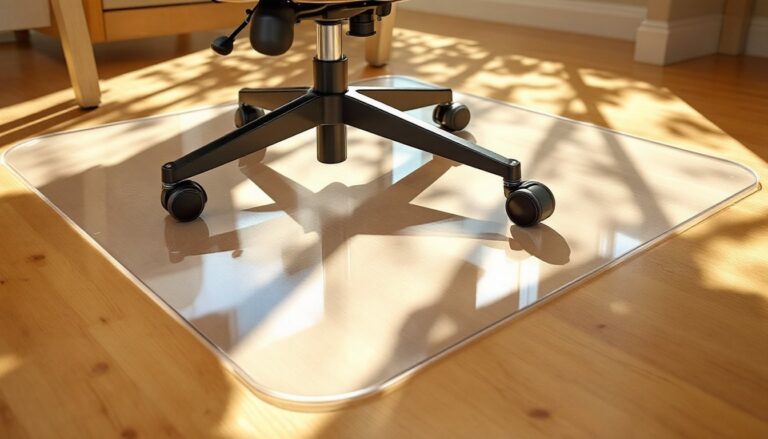
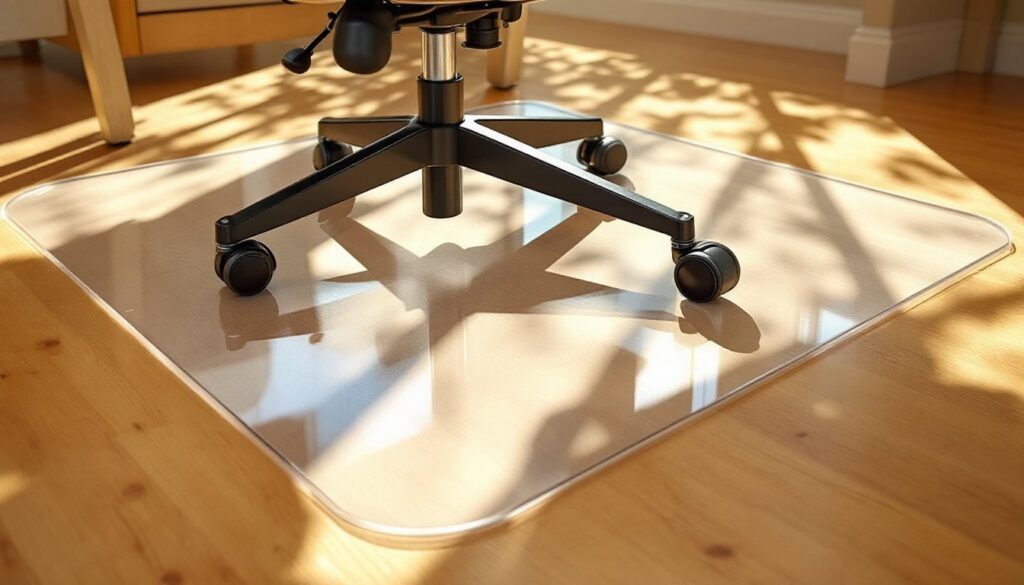
ToggleRolling chairs and bare floors don’t mix well. Whether it’s hardwood showing wear patterns, carpet compressed into permanent wheel tracks, or vinyl cracking under daily stress, the damage adds up faster than most homeowners expect. A quality floor mat isn’t just about aesthetics, it’s about protecting a significant investment in your home’s flooring while making your workspace more functional. The right mat reduces rolling resistance, prevents scratches, and can even extend the life of your chair’s casters.
Key Takeaways
- An office chair floor mat protects hardwood, carpet, and laminate flooring from scratches, dents, and permanent compression caused by concentrated caster wheel pressure.
- Choose between hard floor mats for smooth surfaces and carpet mats with cleats designed for your specific pile height—measuring your carpet before purchasing prevents costly mistakes.
- Polycarbonate mats offer superior durability and impact resistance, while PVC provides budget-friendly protection and glass mats deliver contemporary aesthetics with exceptional weight stability.
- Proper sizing requires measuring your actual rolling zone and adding 6 inches in all directions to prevent damage on unprotected flooring outside the mat area.
- Weekly vacuuming and regular maintenance extend your floor mat’s lifespan to 5-7 years while preserving smooth rolling resistance that reduces physical strain compared to rolling directly on carpet.
- Inspect chair casters quarterly and replace worn wheels to prevent debris trails and scratching that can damage both your mat and underlying flooring.
Why Your Home Office Needs a Floor Mat
Office chairs exert concentrated force through small caster wheels, typically five wheels, each with a contact patch smaller than a dime. On hardwood or laminate, that pressure causes scratches, dents, and finish wear. On carpet, the constant rolling compresses fibers permanently, creating visible tracks that won’t spring back even with professional cleaning.
The damage isn’t always immediate. Medium-density fiberboard (MDF) or particleboard underlayment beneath laminate flooring can compress over time, creating soft spots that telegraph through the surface. Engineered hardwood with thinner wear layers (less than 2mm) shows damage sooner than solid 3/4-inch planks.
Beyond protection, mats improve ergonomics. Rolling resistance on carpet forces users to push harder, straining legs and core muscles throughout the day. A smooth mat surface reduces effort by 40-60% compared to medium-pile carpet. For tile or concrete floors in basements or garage offices, mats add cushioning that reduces fatigue during long work sessions.
Safety Warning: Mats on hard floors can slide unexpectedly. Look for products with gripper backing or add non-slip pads underneath if movement becomes an issue.
Types of Office Chair Floor Mats Explained
Hard Floor vs. Carpet Mats
The distinction isn’t just marketing, it’s engineering. Hard floor mats use smooth bottom surfaces that grip through weight and friction. They’re typically thinner (1/8 to 1/4 inch) and rely on the flat floor beneath for support. Most feature polished top surfaces that allow effortless rolling.
Carpet mats need cleats or spikes on the underside to anchor into carpet fibers and padding. Standard cleat lengths are 7/16 inch for low-pile carpet (less than 1/2 inch pile height) and up to 3/4 inch for plush or high-pile carpet. Using a hard floor mat on carpet creates a trampoline effect, the mat flexes with every movement, negating its benefits.
Measure your carpet pile height before buying. Fold back a corner and measure from the backing to the top of the fibers. Guessing wrong means buying twice.
Material Options and Their Benefits
Polycarbonate offers the best clarity and impact resistance. It’s the same material used in bulletproof glass, so chair drops and heavy use won’t crack it. Expect to pay $60-150 for a standard 36×48-inch mat. Polycarbonate handles temperature extremes well, relevant for sunrooms or garages that aren’t climate-controlled.
PVC (vinyl) mats cost less ($25-60 for similar sizes) but yellow with UV exposure and can become brittle in cold environments. They’re adequate for interior spaces with consistent temperatures. Some PVC mats off-gas initially: air out the space for 24-48 hours after installation.
Tempered glass mats bring a contemporary aesthetic and are nearly indestructible under normal use, though they’re heavy (20-30 pounds for a standard size) and expensive ($150-300). The weight is actually an advantage, they won’t slide on hard floors. Recent product testing by major home magazines has shown glass mats standing up to years of heavy office use without scratching.
Bamboo and wood mats suit traditional office aesthetics but require periodic treatment with furniture oil to prevent drying and cracking. They’re slippery when new, a plus for rolling, a minus if you stand frequently.
Recycled materials and eco-friendly options have improved significantly. Modern recycled PET mats perform comparably to virgin PVC while diverting plastic bottles from landfills. They typically cost 10-20% more but appeal to environmentally conscious buyers.
How to Choose the Right Size and Shape
Standard rectangular mats come in three common sizes: 36×48 inches (compact desks), 45×53 inches (L-shaped or larger desks), and 48×60 inches (executive or multi-monitor setups). The 36×48 size works for most home offices but measure your actual rolling zone before assuming.
Sit in your chair and roll to every position you use, reaching the keyboard, turning to a side table, pushing back to stand. Add 6 inches beyond your maximum reach in all directions. That’s your minimum mat size. Undersized mats mean you’ll still roll onto unprotected flooring during normal use.
Lip vs. no lip: Mats with a lip extension (typically 10×20 inches) protect the floor directly under your desk where feet rest. If you use a footrest or frequently slide your chair fully under the desk, a lip prevents scuff marks from shoes. Skip the lip if your desk has a center drawer or crossbar that would block the extension.
Custom shapes make sense for unusual desk configurations. Some manufacturers cut mats to templates, useful for corner desks or wraparound workstations. Custom cutting typically adds $20-40 to the base price.
Thickness matters for carpet: Too thin (under 1/8 inch) and the mat will flex, defeating the purpose. Too thick (over 1/4 inch) and you’ll create a trip hazard at the edges. Most carpet mats settle around 3/16 inch as the sweet spot. For workspace modifications and desk setups, creative DIYers have found ways to integrate mats seamlessly with standing desk conversions and custom workstation builds.
Installation Tips for Maximum Effectiveness
Prep work is everything. Vacuum hard floors thoroughly and damp-mop to remove any grit. On carpet, vacuum in multiple directions to lift pile fully. Compressed fibers under a new mat will stay compressed.
For carpet installation, position the mat and press down firmly while walking across the entire surface. The cleats need to penetrate through carpet pile into the padding beneath. If the mat shifts easily after this process, your cleats are too short for your carpet thickness.
Hard floor installation requires checking for level. Mats will rock on uneven flooring, creating noise and wear spots. Engineered floors sometimes have minor high spots at seams, sand them down with 120-grit sandpaper or use self-leveling compound for larger issues.
New polycarbonate and PVC mats arrive rolled and want to curl at the edges. Unroll them and let them rest flat for 24 hours in the room where they’ll be used. Temperature acclimation matters, cold mats are stiff and won’t lay flat until they reach room temperature.
Some installers tape mat edges with clear packing tape to prevent curling. Don’t. Tape residue attracts dirt and the adhesive breaks down, leaving a sticky mess. If edges curl persistently, place books along the perimeter overnight or use purpose-made edge strips designed for chair mats.
For multi-mat offices: If you’re outfitting several workspaces (say, converting a finished basement into multiple workstations), maintain consistent mat types. Switching between materials means different rolling resistance at each desk, a subtle frustration that compounds over time.
Maintenance and Cleaning Best Practices
Mats accumulate debris in the texture of their rolling surface, dust, hair, and crumbs create friction that defeats the smooth-rolling benefit. Vacuum weekly using the hard floor attachment (the rotating brush on carpet mode can scratch polycarbonate).
For deeper cleaning, lift the mat and clean both sides. The underside collects surprising amounts of dirt that transfers onto your floor.
Polycarbonate and PVC: Use warm water with a drop of dish soap and a microfiber cloth. Avoid ammonia-based cleaners, they cloud clear materials over time. For stuck-on residue, isopropyl alcohol on a soft cloth works without damage. According to research from contemporary design publications, maintaining the visual clarity of transparent mats is key to preserving a modern office aesthetic.
Glass mats: Standard glass cleaner works fine. Use a squeegee for streak-free results, just like cleaning windows.
Bamboo and wood: Damp cloth only, never soak wood mats. Reapply furniture oil or wood conditioner every 6-12 months depending on humidity levels. Low humidity (below 30%) causes wood to dry and crack faster.
Inspect chair casters quarterly. Worn or damaged wheels leave debris trails and scratch mat surfaces. Replace casters showing flat spots or missing chunks of material. Standard office chair casters cost $15-25 for a set of five, cheap insurance against mat and floor damage.
Stain removal: For carpet mats, treat stains on the top surface like you would regular carpet. Blot spills immediately and use carpet spot cleaner as needed. The cleated underside is plastic and can be scrubbed more aggressively.
Expect 5-7 years of life from quality mats with proper maintenance. Budget options may show wear in 2-3 years, scratches, cloudiness, or cracked edges. When replacing, recycle old plastic mats through programs that accept #7 plastics (check locally, as not all recycling centers accept polycarbonate).