Table of Contents
ToggleOpening the dishwasher door to find standing water pooling at the bottom is frustrating, and it’s one of the most common issues homeowners face with their LG dishwashers. Before calling a repair tech and paying $150+ for a service call, there are seven straightforward fixes most DIYers can handle with basic hand tools and about an hour of time. The culprit is usually a clog, a kinked hose, or buildup that’s easy to clear once you know where to look. This guide walks through each troubleshooting step in order of likelihood and simplicity, starting with the easiest checks first.
Key Takeaways
- An LG dishwasher not draining is usually caused by clogs in the filter, kinked hose, or debris in the drain pump—all fixable DIY repairs that save the $150+ service call cost.
- Clean your dishwasher filter monthly (or weekly for heavy loads) and inspect the drain hose for kinks or blockages to prevent standing water and drainage issues.
- Check for commonly overlooked culprits like garbage disposal knockout plugs left inside the inlet or clogged air gaps that can completely block drainage.
- Running a vinegar or commercial cleaning cycle every 1–3 months removes hard water mineral deposits and detergent buildup that gradually narrow internal drain passages.
- If the drain pump impeller is jammed, you can test it by spinning it manually with a flashlight—a locked impeller indicates replacement is needed (typically $60–$120 in parts).
Why Your LG Dishwasher Isn’t Draining Properly
LG dishwashers rely on a drain pump to push water through a discharge hose and into the household drain line or garbage disposal. When drainage fails, it’s typically because something is blocking that path, not because the pump itself is dead.
The most common causes include:
- Clogged filter or drain basket trapping food debris and preventing water from reaching the pump
- Kinked or improperly installed drain hose restricting flow
- Blocked garbage disposal knockout plug if the dishwasher was recently installed
- Debris lodged in the drain pump impeller, jamming the motor
- Air gap clogs (if your installation has one) blocking the vent
- Hard water deposits and detergent buildup narrowing internal passages over time
LG models with a Direct Drive pump are generally reliable, but food particles, especially fibrous vegetables, starchy residues, and small bones, can accumulate if dishes aren’t scraped before loading. Standing water also creates a breeding ground for mold and odor, so addressing drainage issues promptly keeps the appliance sanitary.
Before starting any repair, unplug the dishwasher or flip the breaker. You’ll be working near electrical components and water, so cutting power is non-negotiable. Keep a shallow pan or towels handy: you’ll encounter residual water in hoses and the sump area.
Check and Clear the Drain Hose
The drain hose runs from the dishwasher’s pump outlet to either the garbage disposal or a drain tailpiece under the sink. A kink, sag, or blockage here will stop drainage completely.
Tools needed: Adjustable pliers, bucket, flashlight.
- Pull the dishwasher forward slightly to access the rear panel (you may need to remove the lower kickplate first).
- Locate the corrugated drain hose, it’s typically 5/8″ or 7/8″ inner diameter and secured with a spring clamp or screw clamp.
- Inspect for kinks or loops that sag below the level of the connection point. The hose should rise to at least the underside of the countertop before descending to the drain to prevent backflow. This is called a high loop, and many jurisdictions require it per the International Residential Code (IRC).
- Disconnect the hose at the disposal or drain connection. Have a bucket ready, residual water will spill out.
- Flush the hose with a garden hose or at a utility sink. If water doesn’t flow freely, use a plumbing snake or a straightened wire coat hanger to dislodge clogs.
- Reattach securely and ensure the clamp is tight. A loose connection can cause leaks or allow air to break the siphon.
If the hose is cracked, brittle, or has permanent kinks, replace it. Replacement drain hoses cost $10–$20 and are available at appliance parts suppliers. Measure the length before ordering, most are 6 to 10 feet.
Clean the Dishwasher Filter and Drain Basket
LG dishwashers use a cylindrical mesh filter and a flat plate filter located at the bottom of the tub. This assembly catches food particles before they reach the pump. When clogged, water can’t drain, and in some cases, dishes come out greasy because dirty water recirculates.
Tools needed: None (hand removal).
- Remove the lower dish rack to access the tub floor.
- Twist and lift out the cylindrical filter assembly, it usually rotates counterclockwise and pulls straight up. Some LG models have a secondary flat filter underneath: lift that out as well.
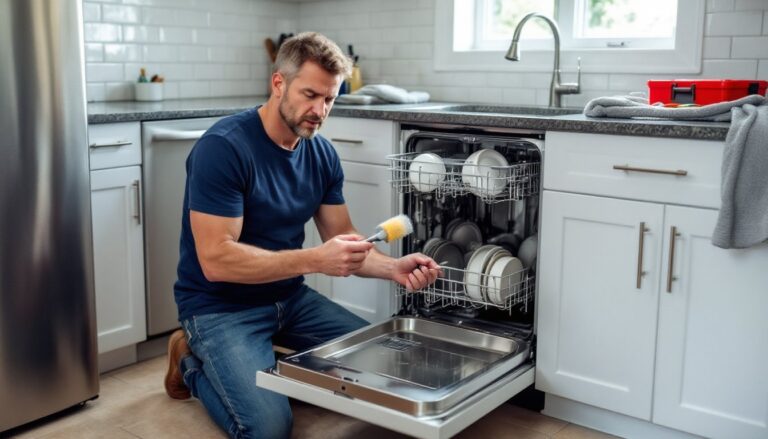
- Rinse both filters under hot running water. Use a soft brush (an old toothbrush works well) to scrub away residue. Avoid abrasive pads that can damage the mesh.
- Inspect the drain basket (the plastic housing where the filter sits). Wipe out any sludge, broken glass, or debris with a damp cloth. Check for small items like toothpicks, bottle caps, or twist ties that could jam the impeller.
- Reinstall the filters in reverse order, ensuring they lock into place. A filter that’s not seated correctly can allow debris into the pump.
How often? LG recommends cleaning the filter once a month under normal use, or weekly if you run heavy loads. Ignoring this maintenance is the single biggest cause of drainage problems. Many common dishwasher repairs stem from neglected filter cleaning.
Inspect the Drain Pump for Clogs or Damage
If the filter is clean and the hose is clear, the issue may be inside the drain pump itself. The pump has a small impeller (a spinning blade) that pushes water out. Food debris, glass shards, or even small bones can jam the impeller or crack the housing.
Tools needed: Screwdriver, needle-nose pliers, flashlight, multimeter (for testing continuity).
- Access the pump compartment by removing the lower spray arm and the filter assembly as described above.
- Check the sump area directly below the filter for visible debris. Use needle-nose pliers to extract anything lodged in the impeller housing.
- Test the impeller manually: Shine a flashlight into the opening and try spinning the impeller with a finger or small tool. It should rotate freely with slight resistance. If it’s locked up, there’s a jam.
- Listen during a drain cycle (if you’re comfortable briefly running the machine). A humming noise without water movement suggests a jammed impeller. A silent pump may indicate electrical failure or a blown motor.
- Test for continuity with a multimeter if you suspect electrical failure. Disconnect power, remove the pump assembly (usually 3–4 screws from underneath), and test the motor windings. You should read 40–80 ohms. Zero or infinite resistance means the motor is shorted or open and needs replacement.
Replacement drain pumps for LG dishwashers run $60–$120 depending on the model. Part numbers vary (e.g., 5859DD9001B for many LDT and LDF series), so verify with your model number before ordering. Installation is straightforward: disconnect hoses, remove mounting screws, swap the pump, and reconnect.
Safety note: Drain pump motors can retain a charge even after unplugging. Discharge capacitors (if present) by shorting terminals with an insulated screwdriver before handling.
Test the Garbage Disposal and Air Gap Connection
If your LG dishwasher drains into a garbage disposal, two installation-related issues can block flow: the knockout plug and a clogged air gap.
Knockout plug: When a new disposal is installed, there’s a plastic plug inside the dishwasher inlet nipple. If the installer forgot to remove it, the dishwasher can’t drain. This is extremely common with DIY disposal installations.
- Disconnect the drain hose from the disposal inlet (on the side of the unit, near the top).
- Shine a flashlight into the inlet port.
- If you see a solid plastic disc, you’ve found the problem. Use a screwdriver and hammer to punch it inward, then retrieve the plug from inside the disposal chamber. Run the disposal briefly to clear fragments.
- Reconnect the drain hose securely.
Air gap: Some jurisdictions require an air gap, a small chrome or plastic dome on the countertop or sink rim, to prevent backflow per plumbing codes. The air gap has two hose connections: one from the dishwasher, one to the disposal or drain.
- Pop off the decorative cap on the air gap (it usually just lifts or twists).
- Remove the small screen or cover inside and rinse it clean. Food particles and soap scum can build up here.
- Check both hose connections for clogs. Detach and flush if needed.
If water spurts from the air gap during a drain cycle, it indicates a blockage downstream, either in the disposal, the drain hose, or the sink’s drain line. Many dishwasher drainage failures trace back to these two often-overlooked components.
Run a Cleaning Cycle to Remove Buildup
Even with a clear filter and hose, hard water minerals, detergent residue, and grease can coat internal spray arms, drain passages, and the pump housing. Running a deep cleaning cycle can dissolve buildup and restore full drainage capacity.
Method 1: Vinegar cycle
- Remove all dishes from the washer.
- Place 2 cups of white distilled vinegar in a dishwasher-safe bowl on the top rack.
- Run a full hot water cycle without detergent. The vinegar will dissolve mineral deposits and cut grease.
- Wipe down the interior with a damp cloth afterward, especially around the door gasket and spray arm ports.
Method 2: Commercial dishwasher cleaner
Products like Affresh Dishwasher Cleaner or Finish Dishwasher Cleaner (available at most grocery stores for $5–$8) are formulated to tackle limescale and detergent buildup. Follow package directions, typically, you place the tablet in the detergent dispenser and run a hot cycle.
Baking soda boost: After the vinegar cycle, sprinkle 1 cup of baking soda across the tub floor and run a short hot cycle. This neutralizes odors and further scrubs interior surfaces.
Regular cleaning, every 1–3 months depending on water hardness, prevents buildup from becoming a drainage problem. If you have very hard water (above 10 grains per gallon), consider using a rinse aid and running hot water at the sink before starting the dishwasher to ensure the incoming water temperature is adequate. LG recommends an inlet water temperature of 120°F for optimal performance, which also helps dissolve detergent and fats that could clog the system.
Conclusion
Most LG dishwasher drainage issues come down to clogs in the filter, hose, or pump, problems any homeowner can fix with basic tools and a little patience. Start with the simplest checks (filter and hose) before moving to the pump or disposal connections. Regular filter cleaning and periodic descaling cycles will keep drainage problems from recurring. If you’ve worked through all seven fixes and still have standing water, the control board or a valve may be faulty, at that point, calling an appliance tech is the smart move. But in the majority of cases, one of these DIY repairs will get your dishwasher draining like new again.