Table of Contents
ToggleSpace is the ultimate luxury in modern homes. Whether it’s a downtown condo, a basement apartment, or a compact laundry closet, finding room for both a washer and dryer can feel like solving a Rubik’s cube. Enter the LG ventless washer dryer combo, a single appliance that handles both wash and dry cycles without requiring an external vent. These units have evolved from niche European imports to genuine contenders in the North American market, offering homeowners and renters a practical solution when square footage is tight. This guide breaks down how LG’s ventless combos work, what sets them apart, and whether one belongs in your home.
Key Takeaways
- LG ventless washer dryer combo units eliminate the need for external venting by using condensation drying technology, making them ideal for apartments, condos, and compact laundry spaces where ductwork isn’t feasible.
- These units are ENERGY STAR certified and reduce electricity consumption by up to 50% compared to vented dryers while operating at gentler temperatures (120–140°F) that protect fabrics from shrinkage and wear.
- An LG ventless combo handles a full wash cycle in one drum with no mid-cycle transfer needed, offering single-load convenience and quiet operation at 50–55 decibels, making them perfect for shared living spaces.
- Drying times are significantly longer—typically 2 to 4 hours per full load—requiring users to adjust expectations and follow best practices like splitting loads and using HE detergent only.
- Popular models like the WM3555HVA ($1,400–$1,600) and premium options like the LG Signature LUWM101HWA ($3,000+) offer 120V plug-and-play installation with stainless steel drums and smartphone app control via ThinQ®.
- An LG ventless washer dryer combo is best suited for small households doing 3–5 loads weekly and anyone prioritizing energy efficiency and fabric care, but not ideal for large families or those needing same-day laundry turnaround.
What Is an LG Ventless Washer Dryer Combo?
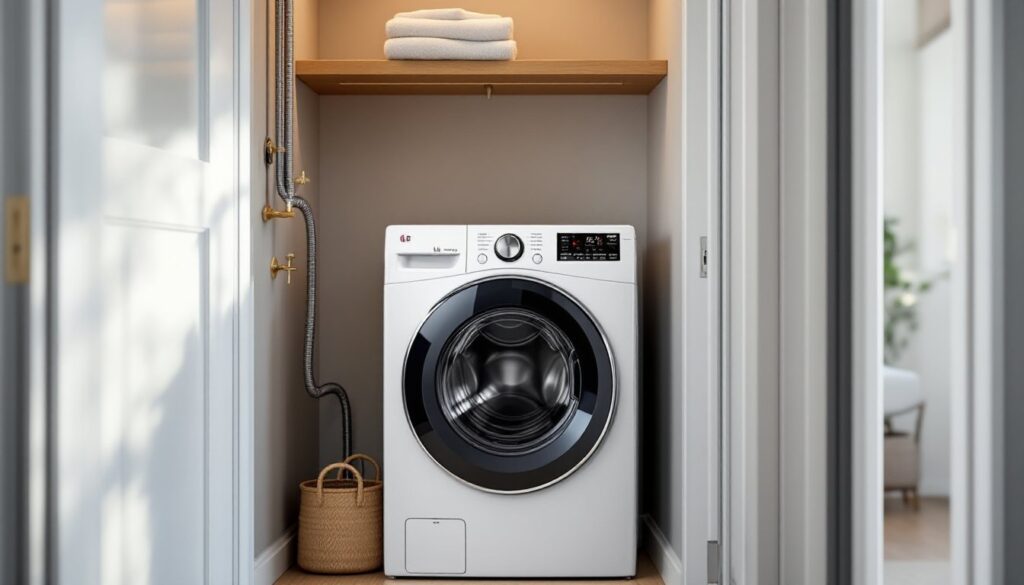
An LG ventless washer dryer combo is a single appliance that washes and dries laundry in one drum without requiring a traditional 4-inch dryer vent. Instead of expelling hot, moist air outdoors, it uses condensation drying, a heat-exchange system that condenses moisture from wet clothes, collects it in a drain line, and recirculates air within the unit.
Most LG combos are 24 inches wide, making them compatible with European-style compact spaces and standard closet depths. They plug into a 120V outlet (some larger models require 240V) and connect to a cold-water supply line and drain, similar setup to a dishwasher. No contractor. No ductwork. No punching holes in exterior walls.
LG offers both all-in-one models (washer and dryer in a single drum) and stacked configurations (separate washer and dryer units designed to stack vertically). The all-in-one ventless combos are what most people mean when they say “combo unit”, they wash a load, then switch to dry mode automatically or with one button press. Capacity typically ranges from 2.3 to 4.5 cubic feet, smaller than traditional top-loaders but adequate for singles, couples, or small families running multiple loads per week.
Key Benefits of Choosing an LG Ventless Combo Unit
No venting means flexible placement. You can install the unit in a closet, under a counter, in a bathroom, or even a kitchen nook, anywhere with access to water and drainage. This flexibility is a game-changer for apartments, condos, tiny homes, and older houses where adding ductwork isn’t feasible or affordable.
Energy and water efficiency. LG’s ventless combos are ENERGY STAR certified and use significantly less water than traditional top-loaders. Condensation drying recycles heat, and many models feature heat pump technology, which operates at lower temperatures and reduces electricity consumption by up to 50% compared to vented dryers.
Gentler on fabrics. Because ventless dryers operate at lower temperatures (typically 120–140°F vs. 150–180°F in vented dryers), they reduce shrinkage and fabric wear. Delicates, activewear, and anything prone to heat damage benefit from the gentler cycle.
Single-drum convenience. Load it once, press start, and come back to dry clothes. No mid-cycle transfer. This is especially valuable for people with mobility issues or those juggling kids and laundry simultaneously. That said, you can’t wash one load while drying another, a trade-off worth noting if you’re doing back-to-back laundry days.
Quiet operation. LG’s TrueBalance™ and Inverter Direct Drive motor technologies reduce vibration and noise. Most models run at 50–55 decibels during wash, comparable to normal conversation. Helpful if your laundry area shares a wall with a bedroom or living space.
Top LG Ventless Washer Dryer Combo Models in 2026
LG WM3555HVA (All-in-One Combo) remains one of the most popular units. It offers 2.3 cubic feet of capacity, 14 wash cycles, and ventless condensing dry. It’s a 120V plug-and-play model, meaning no electrical upgrades for most homes. Retail sits around $1,400–$1,600 depending on sales. It’s been tested extensively by cleaning experts evaluating combo units, earning points for reliability and wash quality.
LG WashTower™ (Stacked Ventless) is technically two appliances in a single chassis, but the washer and dryer share one control panel with Center Control™ technology. The dryer is ventless and uses heat pump drying. Total capacity is about 4.5 cubic feet for the washer, 4.0 cubic feet for the dryer. It’s taller (about 74 inches), so measure your ceiling clearance. Pricing runs $2,200–$2,800.
LG Signature LUWM101HWA is the luxury option, sleek, minimal design with a built-in pedestal and high-resolution LCD screen. Capacity is 2.4 cubic feet, and it features TurboWash™ for faster cycles and AI DD™ (Artificial Intelligence Direct Drive), which detects fabric type and adjusts drum motion accordingly. Expect to pay $3,000+.
All three models use stainless steel drums, which resist rust and last longer than plastic or porcelain. They’re compatible with LG’s ThinQ® app, allowing remote start, cycle monitoring, and troubleshooting diagnostics from your phone. Model availability and pricing can shift, so checking current reviews of the best ventless combos helps narrow your choice.
Installation Requirements and Setup Tips
You’ll need:
- A 120V or 240V outlet (check your model’s spec sheet). Most all-in-one combos use 120V: stacked heat-pump units often require 240V.
- A cold-water supply line with shut-off valve. Hot water is generated internally by the unit.
- A drain connection, either a standpipe (like a washing machine drain), a floor drain, or a sink drain with appropriate adapter.
- Level floor. These units are front-loading and spin at high RPMs (up to 1,400). An unlevel machine will vibrate, walk, and potentially damage the drum bearings.
Step-by-step setup:
- Measure your space. Standard LG combos are 24 inches wide, 24–27 inches deep, and 33–34 inches tall. Add 1 inch on each side for clearance and vibration. Door swing requires another 20+ inches in front.
- Check door swing direction. Many LG models allow reversible door hinges, helpful if your closet opens left instead of right.
- Install water line and drain hose. Use stainless steel braided supply hoses, not the cheap rubber ones. Tighten by hand, then a quarter-turn with pliers, overtightening can crack plastic fittings. Secure the drain hose at least 18 inches above the floor to prevent backflow (consult your manual for exact height).
- Level the unit. Adjust the front leveling feet until a bubble level shows plumb in all directions. Lock the feet with the provided jam nuts.
- Run a test cycle. Use the Tub Clean cycle (no clothes, no detergent) to flush manufacturing residues and check for leaks.
Permits? Typically not required for a direct replacement or installation that doesn’t alter plumbing or electrical beyond connecting appliances. If you’re adding new water lines or a 240V circuit, check local codes. Some jurisdictions require licensed plumbers or electricians for that work.
Pro tip: If you’re in a condo or rental, verify that ventless dryers are allowed. Some HOAs or landlords have appliance restrictions.
Performance: What to Expect from Wash and Dry Cycles
Wash performance is on par with standalone front-loaders. LG’s 6Motion™ technology rotates the drum in multiple directions (rolling, stepping, scrubbing, swing, tumbling, filtration) to match fabric type and soil level. Heavy-duty cycles handle work clothes and towels: delicate cycles manage lingerie and knitwear without damage.
Spin speeds range from 1,200 to 1,400 RPM, extracting more water than top-loaders. This means shorter dry times and less energy use.
Dry performance is the trade-off. Condensation and heat-pump drying take significantly longer than vented dryers, often 2 to 4 hours for a full load, depending on fabric type and how damp clothes are post-spin. Because the system recycles air and operates at lower temps, it’s gentler but slower.
You won’t get the same fluffy-towel effect as a high-heat vented dryer. Towels and heavy cotton items may come out slightly stiff. A quick shake or a brief tumble with dryer balls helps. Synthetic fabrics, blends, and everyday clothing dry well.
Capacity reality check: A combo rated at 2.3 cubic feet can wash that full amount, but the dry capacity is smaller, usually around 50–60% of wash capacity. Overloading the dryer leads to damp spots and extended cycles. Best practice: wash a full load, then split it into two dry cycles, or reduce wash load size for single-cycle convenience.
Cycle times: A typical wash cycle runs 45–90 minutes. Add 2–3 hours for drying. Total time from dirty to dry: 3–5 hours. Not ideal if you need clothes in a hurry, but perfect for overnight or daytime cycles in small space living situations where convenience outweighs speed.
Is an LG Ventless Washer Dryer Combo Right for Your Home?
Best fit for:
- Apartments, condos, or homes without existing dryer vents
- Laundry closets, bathrooms, or kitchens where venting isn’t an option
- Households doing 3–5 loads per week or fewer (singles, couples, small families)
- Anyone prioritizing energy efficiency and fabric care over speed
- Renters who want laundry in-unit without permanent modifications
Not ideal if:
- You’re running 7+ loads per week. The long dry times and smaller capacities become bottlenecks.
- You need same-day turnaround (sports uniforms, work clothes). A vented dryer is faster.
- You’re washing and drying heavy bedding, comforters, or large bath towels regularly. These items take hours to dry and may exceed the combo’s practical capacity.
- You have space and budget for separate washer and dryer. Two machines offer more capacity and flexibility.
Maintenance heads-up: Ventless dryers require more frequent filter cleaning, both the lint filter and the heat exchanger or condenser filter (depending on model). LG units usually have indicator lights. Skipping this step reduces efficiency and lengthens dry times. Plan on a quick filter rinse every 5–10 loads.
Detergent matters. Use HE (high-efficiency) detergent only, and use less than you think, about 1–2 tablespoons per load. Excess suds interfere with the condensation process and leave residue.
Cost breakdown (approximate, mid-2026):
- Unit: $1,400–$3,000+ depending on model and features
- Installation (if hiring a pro): $150–$400 for water line hookup, drain connection, and leveling
- Operating costs: Roughly $0.10–$0.25 per combined wash/dry cycle, depending on local electricity and water rates, considerably less than traditional setups
These units aren’t a compromise, they’re a different tool for a different job. If your space, lifestyle, or building infrastructure makes a vented dryer impractical, an LG ventless combo delivers clean, dry laundry without the need for ductwork or major renovation.
Conclusion
LG’s ventless washer dryer combos solve real problems for real homes, tight spaces, old buildings, rental restrictions, and the need for efficient, flexible laundry solutions. They’re slower than traditional dryers and require some habit adjustments, but they deliver solid performance where conventional setups can’t fit or aren’t allowed. Measure your space, assess your laundry volume, and pick the model that matches your needs. For many homeowners and renters, that single drum changes everything.