Table of Contents
ToggleAir quality isn’t just a concern for allergy sufferers anymore, it’s a home improvement priority that ranks right up there with insulation and HVAC efficiency. Levoit has carved out a solid reputation in the air purifier market over the past few years, offering units that promise HEPA filtration at price points that won’t require a second mortgage. But do these devices actually deliver cleaner air, or are they just another smart home gadget taking up floor space? This review breaks down real-world performance, filtration capabilities, and whether Levoit’s lineup justifies the investment for homeowners serious about indoor air quality.
Key Takeaways
- Levoit air purifier models deliver competitive CADR ratings (130–410 cfm) with True HEPA filtration that captures 99.97% of particles, making them effective for small to large room sizes at budget-friendly price points.
- Smart features like the VeSync app, voice control compatibility, and auto-mode air quality sensing are genuinely useful without inflated costs, though Levoit lacks HomeKit integration for Apple ecosystem users.
- Bedroom-friendly noise levels ranging from 24 dB on low to 52 dB on high, combined with minimal energy consumption (10–45 watts), make Levoit air purifiers practical for continuous overnight operation.
- Long-term ownership costs include filter replacements every 6–8 months ($30–50 per filter), so budget an additional $30–50 annually per unit beyond the initial $90–300 purchase price.
- Proper placement at least 15 inches from walls and avoiding carpet improve airflow and effectiveness, while regular pre-filter vacuuming can extend main filter life and reduce replacement frequency.
- For allergy sufferers and pet owners, Levoit air purifiers show measurable improvement in indoor air quality within 24–48 hours, though they cannot eliminate gases like radon or address structural ventilation issues.
Why Levoit Air Purifiers Stand Out in the Smart Home Market
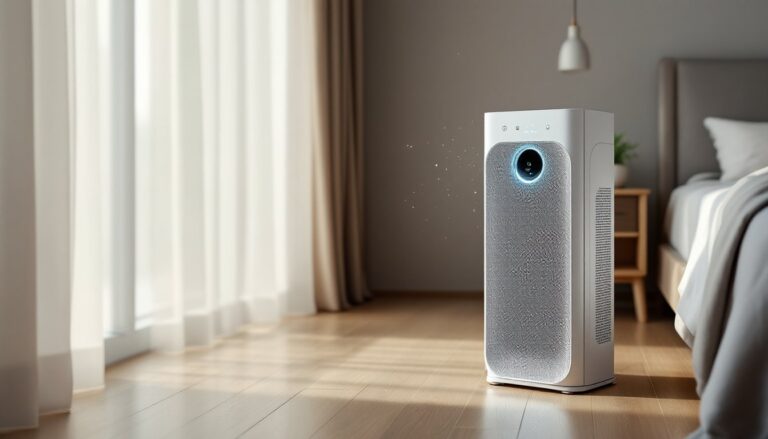
Levoit entered a crowded field dominated by established brands like Honeywell and Blueair, but they’ve managed to differentiate themselves through a combination of competitive pricing and genuinely useful features. Most of their models use three-stage filtration: a pre-filter for large particles, a True HEPA filter (capturing 99.97% of particles down to 0.3 microns), and an activated carbon filter for odors and VOCs.
What sets Levoit apart is their focus on bedroom-friendly operation. Many competitors build units that work well but sound like a box fan on high. Levoit prioritizes low-decibel operation even on higher speeds, which matters if you’re running the purifier overnight in a sleeping area. They’ve also integrated smart features without the inflated price tag, most mid-range models include Wi-Fi connectivity and voice control compatibility.
The brand avoids gimmicks like ionizers or UV-C lights, which some manufacturers add as marketing bullet points but offer questionable real-world benefit (and in some cases, produce trace ozone). Levoit sticks to mechanical filtration, which is the gold standard according to EPA guidance. For DIYers integrating smart home systems, Levoit units work with Alexa, Google Assistant, and their proprietary VeSync app without requiring a separate hub.
Performance and Filtration: How Well Does Levoit Actually Clean Your Air?
The real test of any air purifier is its Clean Air Delivery Rate (CADR), measured in cubic feet per minute for smoke, dust, and pollen. Levoit’s Core series models typically post CADR ratings between 130-230, which is competitive for their price bracket. That means a unit rated for a 300-square-foot room will cycle the air roughly five times per hour, the industry standard for effective purification.
In practical terms, users with pet dander, seasonal allergies, or nearby wildfire smoke report noticeable improvement within 24-48 hours of continuous operation. The True HEPA filter handles particulate matter effectively, though it won’t remove gases like radon or carbon monoxide (nothing short of ventilation will). The activated carbon layer tackles cooking odors and light chemical smells, but heavy paint fumes or strong solvents will overwhelm it, expect to replace filters more frequently if you’re refinishing furniture or doing extensive painting indoors.
One limitation: Levoit units use cylindrical filters, which offer good surface area but cost $30-50 to replace depending on the model. That’s on par with competitors, but some users prefer models with washable pre-filters to extend the main filter’s life. Independent testing from sources like CNET’s air purifier reviews generally confirms Levoit’s advertised performance, though real-world results depend heavily on room size, air circulation, and how often you’re opening windows.
Top Levoit Models Compared for Different Room Sizes
Choosing the right model depends on square footage and specific needs. Here’s a breakdown:
Levoit Core 300 – Best for small to medium rooms (up to 219 sq ft). CADR of 135 cfm. Compact footprint (8.7″ diameter), quiet at 24 dB on low. Good for bedrooms or home offices. Around $100. Filter replacement every 6-8 months.
Levoit Core 400S – Mid-range workhorse for spaces up to 403 sq ft. CADR of 260 cfm. Adds smart features and air quality sensor. Runs about $200. Better for living rooms or open-plan areas where you want app control and auto mode.
Levoit Core 600S – Large room coverage (up to 635 sq ft). CADR of 410 cfm. Built for great rooms, basements, or open kitchens. Includes laser dust sensor for real-time PM2.5 readings. Price hovers around $300. This is the model serious about whole-floor coverage.
Levoit Vital 100 – Budget option for tight spaces (up to 300 sq ft). Manual controls only, no app. CADR of 130 cfm. Stripped-down but reliable if you don’t need smart features. Around $90.
For most homeowners tackling a bedroom or standard living room, the Core 300 or Core 400S hits the sweet spot. If you’re dealing with an open floor plan or want to handle a basement workshop where you’re sanding or using wood stain, step up to the 600S. Don’t oversize wildly, a unit rated for 600 sq ft in a 200 sq ft room just wastes energy and filter life.
Smart Features and App Control: Tech That Makes a Difference
Levoit’s VeSync app (iOS and Android) gives you remote control, scheduling, and filter-life tracking. You can turn the unit on before you get home, adjust fan speed from bed, or set a timer to run only during high-pollen hours. It’s genuinely useful, not just a checkbox feature.
The app also displays real-time PM2.5 levels (particulate matter smaller than 2.5 microns) if your model has a sensor. This lets you see when air quality dips, say, after cooking or when wildfire smoke drifts in, and confirm the purifier is actually working. Some models include an auto mode that ramps fan speed up or down based on detected pollution, which saves energy and reduces noise when air is already clean.
Voice control through Alexa or Google Assistant works reliably for basic commands (on/off, fan speed). You won’t get granular filter-life stats by voice, but it’s handy for quick adjustments. Integration with HomeKit is absent, which may frustrate Apple-ecosystem users.
One gripe: the app occasionally prompts for firmware updates that require the unit to restart, which can be annoying if you’re mid-project and need continuous filtration. But overall, the smart features are well-executed and don’t require a hub or complicated setup, just standard Wi-Fi and a straightforward pairing process.
Noise Levels and Energy Efficiency: Living With a Levoit Daily
Noise is where Levoit shines. On the lowest setting, most models hover around 24-26 dB, quieter than a whisper, comparable to a desktop PC’s ambient hum. Mid speeds run 40-45 dB, roughly the sound of a refrigerator. High/turbo mode pushes 50-52 dB, audible but not disruptive unless you’re trying to record audio or hold a quiet conversation right next to it.
For bedroom use, expect to run on low or medium overnight without issue. If you’re sensitive to white noise, the fan hum can actually be a positive, many users report it helps them sleep. Just avoid placing the unit on a hollow floor or against a thin wall where vibration might amplify.
Energy consumption is minimal. Most Levoit units pull 10-45 watts depending on fan speed. Running 24/7 on medium, you’re looking at roughly 25 kWh per month, or about $3-4 added to your electric bill at average U.S. rates. That’s less than a standard incandescent bulb. The units are Energy Star certified, which matters if you’re running multiple purifiers or trying to keep whole-home operating costs in check.
One practical note: place the unit at least 15 inches from walls or furniture to allow proper airflow. Tucking it into a corner or behind a couch chokes intake and reduces effectiveness, much like blocking a return vent in your HVAC system. Also, keep it off carpet if possible, hard floors make it easier to vacuum around and prevent dust buildup at the intake.
Cost Analysis: Upfront Price vs. Long-Term Filter Replacement
Initial costs are straightforward: entry models start around $90, mid-range units run $150-220, and large-room versions top out near $300. That’s competitive with brands like Coway and undercuts Dyson or IQAir by hundreds.
The hidden cost is filter replacement. Levoit recommends changing the True HEPA and activated carbon combo filter every 6-8 months under typical use. Replacement filters cost:
- Core 300: ~$30 per filter
- Core 400S: ~$45 per filter
- Core 600S: ~$50 per filter
Assuming one replacement per year (realistic for moderate use), you’re adding $30-50 annually per unit. Over five years, a Core 400S runs about $200 upfront plus $225 in filters, $425 total. That’s still cheaper than premium brands, but it’s worth factoring in if you’re comparing to models with washable filters (though those often sacrifice filtration performance).
Some users stretch filter life by vacuuming the pre-filter monthly and running the unit less frequently, but this risks reduced performance and potential motor strain. The app tracks filter life by runtime hours, not air quality, so if you’re in a dusty environment (renovation work, nearby construction), expect to replace sooner.
Is it worth it? For homeowners dealing with allergies, pet dander, or smoke, the health and comfort benefits justify the cost. Testing from Good Housekeeping and similar sources consistently shows measurable improvement in indoor air quality with proper HEPA filtration. If you’re on the fence, start with one unit in your most-used space and assess the impact before outfitting the whole house.
Conclusion
Levoit delivers where it matters: reliable HEPA filtration, genuinely quiet operation, and smart features that aren’t gimmicky. The units won’t fix poor ventilation or eliminate mold (address those structurally), but for day-to-day particulate matter, they’re a solid investment. Detailed performance assessments from reviewers like Tom’s Guide confirm what users report, these devices work as advertised when sized and maintained correctly. If you’re serious about indoor air quality and want a tool that integrates cleanly into a smart home setup, Levoit belongs on the short list.