Table of Contents
ToggleOdoBan isn’t just another carpet cleaner sitting on the shelf at your local hardware store, it’s a multi-purpose cleaner, disinfectant, and odor eliminator that’s been quietly doing heavy lifting in homes and commercial spaces for decades. Originally formulated for institutional use, this concentrate has earned a reputation among DIYers for tackling carpet stains and smells that other products leave behind. Whether dealing with pet accidents, tracked-in mud, or just general grime, understanding how to use OdoBan properly makes the difference between fresh, clean carpets and a sticky, over-saturated mess. This guide walks through everything from dilution ratios to common mistakes.
Key Takeaways
- OdoBan carpet cleaner is an EPA-registered disinfectant concentrate that eliminates odors at the molecular level using quaternary ammonium compounds, making it more effective than fragrance-masked cleaners for tackling pet accidents and embedded smells.
- A single gallon of OdoBan concentrate yields up to 128 gallons of ready-to-use solution, offering superior cost efficiency and versatility compared to pre-mixed carpet cleaners and reducing the need for multiple single-purpose products.
- Proper dilution is critical: use 1 ounce per gallon for light cleaning, 4-6 ounces per gallon for general cleaning, and 1:10 ratio for spot treatment to avoid sticky residue and ensure effective stain removal.
- The most common mistakes when using OdoBan include over-wetting carpets, skipping pre-vacuum, using undiluted solution, and ignoring dry time—all of which lead to mold, mildew, or re-soiling within weeks.
- OdoBan outperforms other carpet cleaning solutions by combining disinfection with stain removal in one product, making it ideal for households with pets, kids, high traffic, or post-illness sanitation needs.
- Always vacuum thoroughly first, test on hidden areas before full application, and ensure carpets dry within 6-12 hours using fans or dehumidifiers to prevent damage and maintain long-term carpet performance.
What Is OdoBan Carpet Cleaner and How Does It Work?
OdoBan is a concentrated disinfectant cleaner registered with the EPA, formulated to kill bacteria, viruses, and fungi while eliminating odors at the molecular level. Unlike basic carpet shampoos that mask smells with fragrance, OdoBan chemically neutralizes odor-causing compounds through quaternary ammonium compounds (quats), which disrupt microbial cell walls and deactivate protein-based stains.
The product comes as a concentrate, typically in 1-gallon or 32-ounce bottles, requiring dilution before use. This concentrate format gives users control over strength based on the cleaning task. For carpets, OdoBan acts as both a pre-treatment and a machine-cleaning solution, breaking down organic stains (urine, vomit, food spills) while sanitizing fibers.
When applied to carpet, the active ingredients penetrate pile fibers and backing, targeting embedded soil and bacteria. The surfactants in the formula lift dirt particles away from fibers so they can be extracted during rinsing or vacuuming. Because it’s a true disinfectant, OdoBan kills 99.99% of germs on hard, non-porous surfaces when used at full strength, though carpet applications use diluted ratios that still provide strong deodorizing and cleaning power without over-wetting.
Key Benefits of Using OdoBan for Carpet Cleaning
The primary advantage is dual-action cleaning: OdoBan removes visible stains while eliminating odors rather than covering them. This makes it particularly effective for households with pets, kids, or high foot traffic where smells can settle deep into padding.
Another benefit is cost efficiency. A single gallon of concentrate yields up to 128 gallons of ready-to-use solution at standard dilution (1 ounce per gallon of water), which stretches far beyond pre-mixed carpet cleaners. This dilution flexibility lets users adjust strength for light refreshing versus deep stain removal.
OdoBan also works across multiple surfaces beyond carpet, tile, upholstery, laundry, hard floors, reducing the need for a cabinet full of single-purpose products. Many home organization strategies recommend consolidating cleaning supplies, and OdoBan’s versatility supports that approach.
The product leaves minimal residue when diluted correctly and rinsed properly, which prevents the sticky buildup that attracts dirt in the weeks following cleaning. Residue-heavy cleaners cause carpets to re-soil faster, a common frustration with some retail brands.
Finally, OdoBan comes in multiple scent options (eucalyptus, lavender, citrus, unscented) and fragrance-free formulations for those sensitive to added perfumes. The eucalyptus variant is popular for its clean, non-cloying scent that doesn’t linger excessively.
How to Use OdoBan Carpet Cleaner: Step-by-Step Instructions
Before mixing or applying anything, vacuum thoroughly. Dry soil makes up roughly 80% of carpet dirt, and removing it first prevents mud formation once liquid cleaner hits the fibers. Use a vacuum with a beater bar or motorized brush head to lift embedded particles.
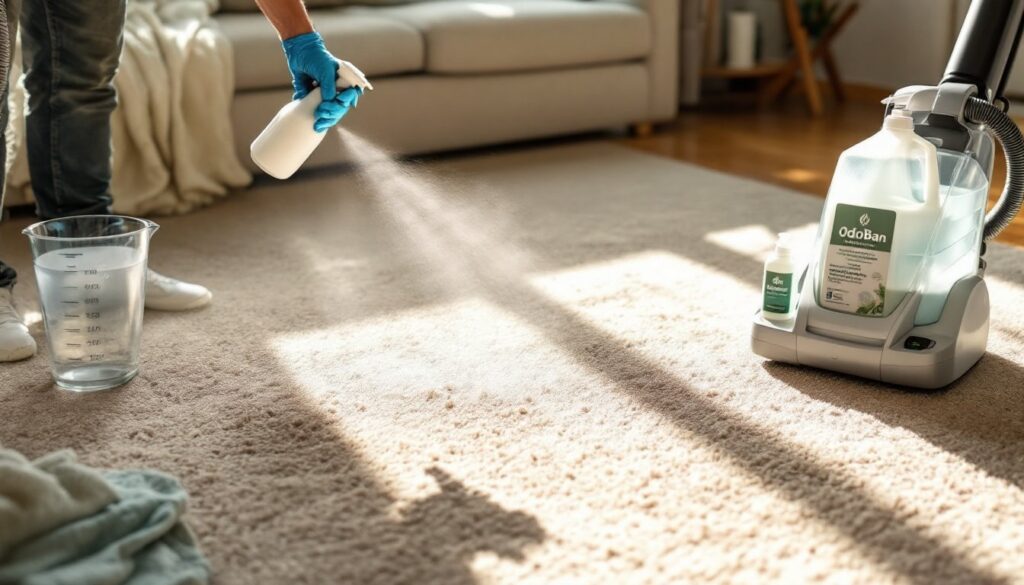
Next, pre-treat visible stains. Mix OdoBan at a 1:10 ratio (1 part OdoBan to 10 parts water) in a spray bottle. Spray directly onto stains, pet accidents, wine, coffee, and let sit for 5–10 minutes. Blot with a clean white towel: avoid scrubbing, which damages carpet pile and spreads the stain.
For machine cleaning (carpet extractor or steam cleaner), prepare the solution according to machine type. Most extractors have separate clean water and detergent tanks. Add diluted OdoBan to the clean water tank, not the detergent reservoir, unless the machine’s manual specifies otherwise.
Run the machine in slow, overlapping passes. Make one wet pass to apply solution, then one or two dry passes (without dispensing liquid) to extract moisture. Over-wetting is the most common DIY mistake, it leads to mold, mildew, and delamination of carpet backing.
After cleaning, ventilate the room. Open windows, run fans, or use a dehumidifier to speed drying. Carpet should dry within 6–12 hours. Walk on it minimally until fully dry to prevent re-soiling.
Dilution Ratios and Mixing Guidelines
Correct dilution is critical. Too strong, and you risk residue buildup: too weak, and cleaning power drops. For carpet cleaning, use these ratios:
- Light cleaning/deodorizing: 1 ounce OdoBan per gallon of water (1:128)
- General cleaning: 4–6 ounces per gallon (1:32 to 1:21)
- Heavy stains or odors: 8–10 ounces per gallon (1:16 to 1:13)
- Spot treatment (spray bottle): 1 part OdoBan to 10 parts water (1:10)
Always mix in cold or room-temperature water. Hot water can deactivate some active ingredients and isn’t necessary for effective cleaning. Use a measuring cup or the bottle’s cap (typically 1 ounce) for accuracy. Many cleaning guides emphasize measuring over guessing, since inconsistent dilution leads to unpredictable results.
For machines, consult your extractor’s manual. Some models specify maximum detergent concentration to avoid foam buildup or pump damage. If the manual recommends a “low-foam” cleaner, OdoBan works well, it produces minimal suds compared to traditional shampoos.
Best Practices for Different Carpet Types and Stains
Synthetic carpets (nylon, polyester, olefin) tolerate OdoBan well at standard dilutions. Nylon, the most common residential carpet fiber, is durable and stain-resistant, responding well to regular cleaning. Polyester is more stain-prone but also colorfast, so OdoBan won’t cause fading.
Wool and natural-fiber carpets require caution. Test OdoBan in an inconspicuous area first, behind furniture or in a closet, waiting 24 hours to check for color bleeding or texture changes. Wool is pH-sensitive: while OdoBan is generally neutral, some formulations lean slightly alkaline. If concerned, dilute further (1:64 or weaker) and avoid prolonged soaking.
Berber and loop-pile carpets tend to trap dirt deep in loops. Use a carpet rake or stiff brush after cleaning to lift pile and aid drying. These styles also show wear patterns more than cut-pile, so avoid aggressive scrubbing.
For pet urine, enzymatic cleaners are often recommended, but OdoBan’s quat-based formula also breaks down uric acid crystals. Apply at 1:10 dilution directly to the affected area, saturating down to the padding if the accident is fresh. Let dwell for 10 minutes, then extract with a wet vac. Repeat if odor persists. For old, set-in urine stains, consider lifting the carpet to treat the padding or subfloor, surface cleaning alone won’t eliminate deep odors.
Grease and oil-based stains (makeup, motor oil) may require a degreaser pre-treatment before OdoBan. OdoBan excels with water-soluble and protein-based stains (blood, food, vomit) but struggles with petroleum-based substances.
High-traffic areas benefit from monthly maintenance cleaning with OdoBan at light dilution (1:128), which refreshes fibers and controls odor without the downtime of a full deep clean.
OdoBan vs. Other Carpet Cleaning Solutions: What Sets It Apart?
Compared to mainstream brands like Bissell or Hoover carpet shampoos, OdoBan’s concentrate format offers better value and less plastic waste. Pre-mixed solutions are convenient but expensive per use, and they often contain high water content you’re essentially paying to ship.
OdoBan’s disinfectant registration is a key differentiator. Most carpet cleaners focus solely on stain removal: OdoBan kills pathogens, making it suitable for homes with immune-compromised individuals, daycares, or post-illness cleanups. According to product testing standards, EPA-registered disinfectants must meet specific efficacy benchmarks that general cleaners don’t.
Enzymatic cleaners (like Nature’s Miracle) break down organic matter through bacterial cultures, which works well for fresh pet stains but can take hours to activate and may not fully eliminate odors. OdoBan works faster and doesn’t require the “sit time” enzymatic formulas need, though some users combine both for stubborn issues.
Oxygen-based cleaners (OxiClean, Resolve) use peroxide to lift stains through oxidation. They’re effective on color-based stains (wine, juice) but lack antimicrobial action. OdoBan’s quat-based formula handles both staining and sanitation in one step.
One drawback: OdoBan’s fragrance can be polarizing. The eucalyptus scent is strong when first applied, though it dissipates as the carpet dries. Unscented versions are available for those sensitive to added fragrance.
Professional carpet cleaning services often use truck-mounted steam extraction with pH-balanced detergents and rinse agents. OdoBan can’t replicate that power in a portable rental machine, but it’s a solid middle ground between spot cleaning and hiring pros.
Common Mistakes to Avoid When Using OdoBan on Carpets
Using undiluted OdoBan is the top error. The concentrate is powerful: applying it straight causes sticky residue, attracts dirt, and can leave carpets feeling stiff. Always dilute according to the task.
Over-wetting ranks close behind. More solution doesn’t mean cleaner carpets, it means longer dry times, potential mold growth in padding, and possible delamination where the carpet backing separates from the primary layer. Make multiple dry extraction passes to pull out moisture.
Skipping the pre-vacuum wastes cleaning solution. Dry soil turns to mud when wet, spreading stains rather than removing them. A thorough vacuum removes surface dirt so OdoBan can target embedded grime.
Not testing on hidden areas before full application risks discoloration, especially on natural fibers, antique rugs, or carpets with unstable dyes. A 24-hour spot test saves costly mistakes.
Ignoring drying time leads to mildew and odor. If carpets aren’t dry within 12 hours, increase air circulation with fans or a dehumidifier. Walking on damp carpet with shoes re-introduces dirt that bonds to damp fibers.
Mixing OdoBan with other chemicals, bleach, ammonia, or vinegar, can create hazardous fumes or neutralize active ingredients. Use OdoBan alone or follow with a plain water rinse.
Overuse is another pitfall. More isn’t better. Frequent deep cleaning (more than every 3–4 months for general residential use) can wear down carpet fibers and strip protective treatments some manufacturers apply.
Finally, neglecting PPE: while OdoBan is relatively safe, prolonged skin contact can cause irritation. Wear nitrile gloves when mixing concentrate or hand-scrubbing stains, and ensure good ventilation to avoid inhaling mist during spraying. If using in a confined space, a simple dust mask helps.
By following dilution guidelines, allowing proper drying, and respecting your carpet’s material limits, OdoBan delivers professional-level deodorizing and stain removal without the professional price tag. It’s a workhorse product for homes that see real life, pets, kids, muddy boots, and need a cleaner that keeps up.