Table of Contents
ToggleA marble bathroom vanity brings instant sophistication to any bathroom, but it’s also a significant investment that demands careful planning. Whether you’re replacing a dated laminate top or building a new master bath from scratch, understanding the nuances of marble, from material selection to installation, will save you money and headaches. This guide walks through everything you need to know: the types of marble worth considering, how to match your design style, what installation challenges to expect, and how to keep that polished surface looking sharp for decades.
Key Takeaways
- A marble bathroom vanity offers unique aesthetic appeal and heat resistance, but requires commitment to regular sealing and gentle maintenance to prevent etching and staining.
- Marble types vary significantly in price and durability—Carrara is affordable and durable for daily use, while Calacatti marble commands premium pricing at 2-3 times the cost per square foot for its denser, more dramatic appearance.
- Proper installation demands a perfectly level cabinet base, precise plumbing measurements, and professional handling due to the heavy weight of marble slabs (12-20 pounds per square foot), with DIY installation carrying high risk of costly damage.
- Marble bathroom vanity maintenance is straightforward with consistent routines: seal every 6-12 months with penetrating sealer, clean daily with pH-neutral products, and wipe dry immediately to prevent water rings and etching.
- Budget-friendly marble vanity options include choosing Carrara over Calacatta, selecting prefabricated standard sizes, and pairing marble tops with affordable cabinet bases to maximize impact while minimizing costs.
- A marble bathroom vanity thrives in low-traffic powder rooms and master baths but may be impractical in busy family bathrooms; honed finishes are more forgiving than polished for daily wear in busy bathrooms.
Why Choose a Marble Bathroom Vanity?
Marble has been the gold standard for luxury surfaces since ancient Rome, and for good reason. Each slab is unique, no two pieces share identical veining or coloration, which means your vanity top becomes a one-of-a-kind feature.
Beyond aesthetics, marble offers tangible benefits. It’s naturally cool to the touch, making it comfortable in warm climates. The stone is also highly resistant to heat, so a hot curling iron set down briefly won’t cause damage (though you should still use a mat). Properly sealed marble resists moisture better than many people assume, though it does require more maintenance than engineered quartz.
The trade-offs are real. Marble is a calcium-based stone, which means it’s vulnerable to etching from acidic substances, lemon juice, vinegar-based cleaners, and even some toothpastes can dull the finish. It’s also softer than granite, rating around 3-5 on the Mohs hardness scale, so it scratches more easily. If you want a pristine, showroom look forever, marble may frustrate you. If you appreciate a patina that develops character over time, it’s a perfect match.
Marble works especially well in powder rooms and master baths where traffic is controlled. In a kids’ bathroom with three teenagers fighting for counter space, consider whether the maintenance commitment fits your lifestyle.
Types of Marble for Bathroom Vanities
Not all marble performs the same in a bathroom environment. Here are the most popular types and what sets them apart:
Carrara marble is the most affordable and widely available. Quarried in Tuscany, it features soft gray veining on a white or blue-gray background. It’s a workhorse stone, durable enough for daily use but prone to etching, so you’ll need to seal it every 6-12 months.
Calacatta marble is the premium choice. Thicker, bolder veining in gold or gray against a bright white background makes it instantly recognizable. It’s rarer and significantly more expensive than Carrara, expect to pay 2-3 times as much per square foot. The denser structure holds up slightly better to wear.
Statuario marble sits between Carrara and Calacatta in both price and appearance. It has a whiter background than Carrara with more dramatic veining, often with hints of gold. It’s quarried in the same Italian region but from different strata.
Emperador marble offers warm brown tones with white veining, popular in traditional and Mediterranean-style bathrooms. It’s more forgiving with stains than white marbles because discoloration blends into the natural color variation.
Honed vs. polished finish is the other major decision. A polished finish is glossy and reflective, showcasing the stone’s depth but showing water spots and etching more readily. A honed finish is matte, softer to the eye, and hides minor wear better, many designers recommend honed for bathroom vanities because it’s more forgiving in daily use.
Design Styles and Configurations
Marble vanities adapt to nearly any design style, but the cabinet base and edge profile make a huge difference in the final look.
Traditional styles pair Carrara or Calacatta with furniture-style vanities in cherry, walnut, or painted finishes. Ogee or beveled edge profiles add formality. Undermount sinks are standard, often in white porcelain.
Modern and contemporary designs favor clean lines: flat-front cabinets in matte white, black, or natural oak with a simple eased or straight edge on the marble. Integrated sinks, where the sink is carved from the same slab as the top, create a seamless look but add $800-$1,500 to fabrication costs.
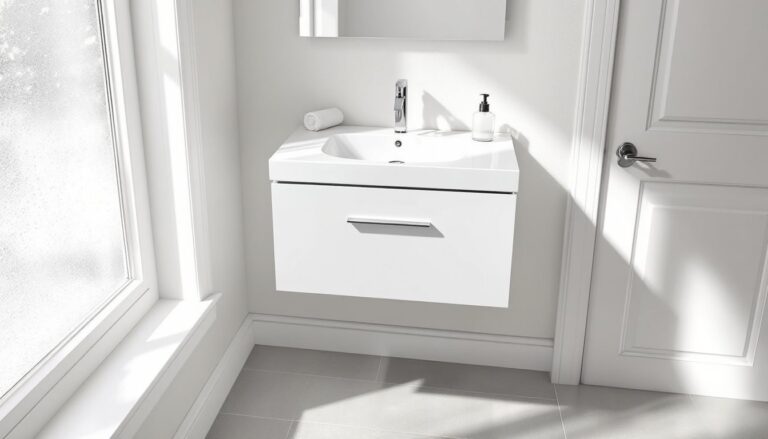
Floating vanities are popular in smaller bathrooms. The marble top appears to hover, with the cabinet mounted to the wall studs (make sure you hit solid backing, drywall anchors won’t support the combined weight). This setup makes floor cleaning easier and visually expands tight spaces.
Double vanity configurations require careful planning. A single slab spanning 72″ or more eliminates seams but costs significantly more and may require crane delivery if your bathroom is upstairs. Most fabricators join two slabs with a color-matched epoxy seam, typically placed at the midpoint or near the plumbing chase.
For those seeking design inspiration for bathroom layouts, exploring curated image galleries can help visualize how marble integrates with different cabinet styles and hardware finishes.
Installation Considerations for Your Marble Vanity
Marble is heavy, expect 12-14 pounds per square foot for 2cm (¾”) slabs and 18-20 pounds per square foot for 3cm (1¼”) slabs. This matters more than you’d think.
First, verify your floor can handle the load. Most residential floors meet code for vanity weights, but if you’re installing a large double vanity on a second floor with questionable joists, consult a structural engineer. A 72″ double vanity with marble top, cabinets, sinks, and plumbing can exceed 400 pounds.
Cabinet base preparation is critical. The cabinet must be perfectly level, use shims on the feet and check with a 48″ level in multiple directions. Marble won’t flex to accommodate an uneven base, and an unlevel top will cause water to pool around the faucet or drain toward one end.
Most pros install a ¾” plywood substrate on top of the cabinet frame to provide a solid, flat surface for the marble. The slab is then secured with clear silicone adhesive in a bead pattern, not a full coat, which can trap moisture and cause mildew.
Plumbing rough-in must be precise. Faucet holes are typically drilled on-site by the fabricator (single-hole, 4″ centerset, or 8″ widespread configurations are standard), but drain and supply line locations need to align exactly. Verify measurements before the slab is cut, mistakes are expensive.
If you’re installing an undermount sink, the fabricator will cut the sink opening and polish the exposed edge. This is done in the shop, not on-site. The sink is then clipped or epoxied to the underside of the marble before installation.
DIY installation is possible if you have experience with heavy materials and two strong helpers, but most homeowners hire pros. Fabricators often include installation in their quote. If the slab cracks during install due to improper support, you’re buying a new slab.
Caring for and Maintaining Your Marble Vanity
Marble’s reputation for being high-maintenance is somewhat deserved, but a consistent routine keeps it looking good.
Sealing is non-negotiable. Apply a penetrating sealer (not a topical coating) every 6-12 months depending on use. The sealer fills the stone’s pores, slowing liquid absorption. Test if it’s time to reseal by dripping water on the surface, if it beads up, you’re good: if it darkens the stone within a few minutes, reseal.
For daily cleaning of natural stone surfaces, use pH-neutral cleaners formulated for marble. Avoid anything acidic (vinegar, lemon-based products) or abrasive (Comet, scouring pads). A simple mix of warm water and a drop of dish soap works fine for routine wipes.
Water rings and soap scum are the enemy. Wipe down the vanity after use, sounds tedious, but it takes 15 seconds and prevents buildup. Use a microfiber cloth to buff dry.
Etching happens when acid dulls the polished surface. Light etching on a polished finish can sometimes be buffed out with marble polishing powder and a soft cloth. Deeper etches require professional re-polishing. Honed finishes hide etching better, which is why many designers recommend them for bathrooms.
Stains are rare if the stone is properly sealed, but organic stains (makeup, hair dye) and oil-based stains (lotion) can occur. Poultice treatments, basically an absorbent paste left on the stain overnight, usually pull out discoloration. You can buy commercial poultices or make one from baking soda and water.
Chips and cracks are tough to repair invisibly. Small chips along edges can be filled with color-matched epoxy, but the repair is usually visible up close. This is why edge protection matters, don’t drop heavy bottles on corners.
Cost Factors and Budgeting Tips
Marble vanity costs vary wildly based on stone type, slab size, edge detail, and your region. Here’s what to expect as of 2026:
Material costs:
- Carrara marble: $50-$100 per square foot installed
- Calacatta marble: $150-$300+ per square foot installed
- Statuario marble: $100-$200 per square foot installed
Those prices include fabrication and basic edge profiles. Exotic marbles and specialty edges (ogee, waterfall, mitered) add 20-40% to the base price.
Fabrication and installation are often bundled, but if quoted separately, expect $200-$400 for template creation, $300-$600 for cutting and polishing, and $150-$300 for installation. Sink cutouts add $75-$150 per sink. Faucet holes are usually included.
Hidden costs include sealing products ($20-$40 per bottle, lasts several applications), specialized cleaners ($10-$15 per bottle), and potential repairs down the road.
Many homeowners exploring remodeling projects and material choices find it helpful to compare installed samples in different lighting before committing to a full slab, colors and veining can look dramatically different under bathroom lighting versus showroom lights.
Budget-friendly strategies:
- Choose Carrara over Calacatta, the performance is nearly identical, and the aesthetic difference is subtle in smaller bathrooms.
- Go with a prefabricated vanity top (31″, 49″, or 61″ standard sizes) instead of custom. You’ll sacrifice some customization but save 30-50%.
- Select a 2cm slab instead of 3cm for a smaller vanity (under 48″), it’s lighter, cheaper, and perfectly adequate with proper support.
- Use marble only on the top and pair it with a budget-friendly cabinet base from a big-box store. The stone makes the statement: the cabinet just needs to be sturdy and level.
Permits typically aren’t required for vanity replacement unless you’re moving plumbing or electrical. If you’re relocating drains or adding new circuits for lighting, check with your local building department.
Conclusion
A marble vanity is a long-term investment that rewards careful selection and honest maintenance. Choose the right stone for your lifestyle, prepare the base properly, and commit to routine sealing and gentle cleaning. Done right, it’ll anchor your bathroom design for decades and age gracefully instead of just looking old.