Table of Contents
ToggleCutting metal with a circular saw isn’t the same as ripping through a two-by-four. The wrong blade will burn out in seconds, throw sparks everywhere, and leave you with a jagged, unusable cut. Metal cutting circular saw blades are purpose-built tools designed to handle ferrous and non-ferrous metals without melting, binding, or shattering under high-speed rotation. Whether you’re trimming steel studs for a basement remodel, cutting aluminum flashing, or fabricating custom brackets, understanding blade types, tooth geometry, and safety protocols makes the difference between a clean job and a trip to the ER. This guide walks through everything needed to select, use, and maintain metal cutting blades safely and effectively.
Key Takeaways
- Metal cutting circular saw blades require more teeth (60-80), shallower gullets, and lower RPM ratings (5,000-6,000) than wood blades to prevent overheating, warping, and dulling when cutting ferrous and non-ferrous metals.
- Carbide-tipped blades cost $30-$80 but deliver cleaner cuts and longer life for soft metals and mild steel, while abrasive blades under $5 work for hardened steel and demolition but produce sparks and rough edges requiring deburring.
- Always wear a full face shield with side-shield safety glasses, hearing protection, and secure the workpiece firmly with clamps or a vise—never force the blade and maintain steady, controlled feed rates to prevent binding and kickback.
- Blade selection for metal cutting depends on material type and thickness: use 60+ teeth for sheet metal, verify RPM compatibility with your saw’s no-load speed, and match kerf width to your cutting precision needs.
- Extend metal cutting circular saw blade life by applying cutting lubricants, maintaining steady feed rates, cleaning debris from carbide teeth, and storing blades individually to protect teeth from damage.
- Work in well-ventilated spaces and keep a Class D fire extinguisher nearby when cutting ferrous metals, as metal cutting generates dangerous heat, toxic fumes (especially from galvanized steel), and highly flammable fine particles.
What Makes Metal Cutting Circular Saw Blades Different?
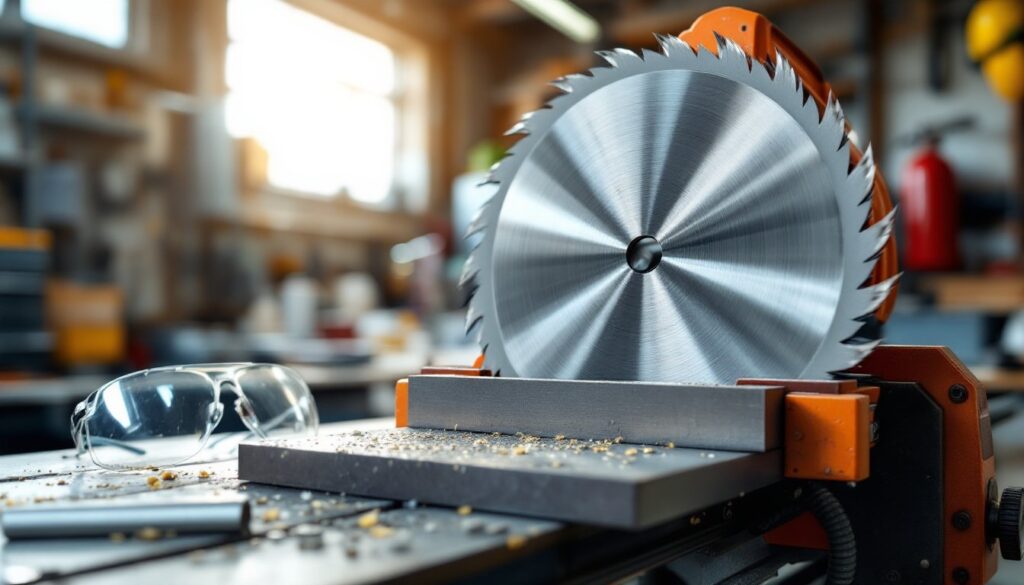
Standard wood-cutting blades have large, aggressive teeth designed to shear through soft fibers. Metal cutting blades operate on entirely different principles. They feature significantly more teeth, often 60 to 80 teeth on a 7¼-inch blade compared to 24 on a framing blade, with much shallower gullets and reduced hook angles. This tooth geometry minimizes the bite per tooth, preventing the blade from grabbing and reducing heat buildup that would otherwise warp the metal or dull the cutting edge.
The substrate material also differs. Abrasive blades use bonded aluminum oxide or silicon carbide particles, essentially grinding through metal rather than cutting it. Carbide-tipped blades use tungsten carbide teeth brazed onto a steel body, designed to slice through metal with minimal friction. Some premium blades incorporate anti-vibration slots, expansion slots to dissipate heat, and special coatings like Teflon or titanium nitride to reduce friction and resist corrosion from metal shavings.
RPM ratings matter more with metal than wood. Most metal cutting blades are rated for lower speeds, typically 5,000 to 6,000 RPM for a 7¼-inch blade, because excessive speed generates friction heat that degrades both the blade and the workpiece. Always check the blade’s maximum RPM rating against your saw’s no-load speed, usually listed on the tool’s nameplate.
Types of Metal Cutting Circular Saw Blades for Different Projects
Choosing between blade types depends on the metal being cut, the precision required, and how frequently the tool will be used. Each style has distinct advantages and limitations.
Abrasive Blades vs. Carbide-Tipped Blades
Abrasive blades look like thin grinding wheels, typically 1/16-inch thick, and work by abrading material away. They’re inexpensive (often under $5) and cut through nearly any metal, including hardened steel, rebar, and cast iron. The downside? They wear down quickly, produce massive showers of sparks, generate significant heat, and leave rougher edges that often need deburring. They’re best for demolition work, cutting rebar, or jobsite tasks where speed and cost matter more than finish quality. Always wear a full face shield, not just safety glasses, when running abrasive blades, metal particles fly at high velocity.
Carbide-tipped blades cost more (typically $30 to $80) but deliver cleaner cuts, longer life, and far less mess. The carbide teeth actually shear through the metal, producing thin curls of swarf instead of sparks. They leave smoother edges that rarely need filing, and they’re much quieter than abrasive discs. These blades excel at cutting aluminum, copper, brass, thin-wall steel tubing, and sheet metal. They’re not suitable for hardened steel or thick structural steel, attempting that will chip the carbide teeth. For projects requiring precision or repeated cuts, carbide blades are worth the investment. Many professionals who cut metal studs for framing exclusively use carbide blades because one blade can last through hundreds of cuts.
Some manufacturers also offer cermet-tipped blades (ceramic-metallic composite), which bridge the gap between carbide and abrasive discs. They handle harder materials than carbide but cost significantly more. For most DIY applications, sticking with either abrasive or carbide covers the necessary range.
How to Choose the Right Blade for Your Metal Cutting Needs
Start by identifying the metal type and thickness. Soft metals, aluminum, copper, brass, cut easily with carbide-tipped blades. Use a blade with at least 60 teeth for sheet metal and thin-wall tubing to prevent the blade from catching and tearing the material. For mild steel up to ⅛-inch thick (like metal studs or angle iron), carbide blades work well. Beyond that thickness or when working with stainless steel, abrasive blades become necessary unless you’re using a dedicated cold-saw setup.
Blade diameter must match the saw’s arbor and guard. Most circular saws use 7¼-inch blades with a ⅝-inch arbor, but verify before purchasing. Smaller 5½-inch and 6½-inch trim saws require correspondingly sized blades. Never use a blade smaller than the saw’s guard accommodates, and never remove the guard to fit an oversized blade, that’s a recipe for serious injury.
Tooth count affects cut quality and speed. Higher tooth counts (80+) produce smoother cuts but feed slower: fewer teeth (40-60) cut faster but leave rougher edges. For framing with metal studs, 48 to 60 teeth provides a good balance. When cutting delicate materials or when appearance matters, opt for 68 teeth or more.
Consider the blade’s kerf, the width of the cut. Thin-kerf blades (under 1/16 inch) require less power and waste less material but are more prone to flexing and vibration. Standard kerf blades are sturdier and better for repetitive cutting. Hand tool fundamentals often emphasize blade stability for consistent results across multiple cuts.
Check your saw’s compatibility. Not all circular saws are designed for metal cutting. Worm-drive saws and dedicated metal-cutting circular saws typically handle the task better than lightweight trim saws. If the saw lacks adequate power (under 13 amps for a corded model), it may bog down or overheat during extended use.
Essential Safety Tips When Cutting Metal with a Circular Saw
Metal cutting generates hazards absent in woodworking. Always wear safety glasses with side shields as a baseline, but upgrade to a full face shield when using abrasive blades. Flying metal particles can cause serious eye injuries or embed in skin. Hearing protection is non-negotiable, metal cutting is significantly louder than wood, often exceeding 100 decibels.
Wear leather gloves to handle the workpiece, but never while operating the saw. Metal edges are razor-sharp immediately after cutting, and burrs can slice through cotton gloves. Keep hands well clear of the cut line: metal doesn’t break away predictably like wood does.
Secure the workpiece firmly. Metal is slippery, especially round tubing or angle iron. Use locking C-clamps or a vise, not just your hand or knee. The torque from a binding blade can twist the material violently. Support both sides of the cut, when the blade exits, the cutoff piece can pinch the blade or fall and strike your leg.
Cutting metal produces heat. Don’t touch the workpiece immediately after cutting: it can be hot enough to burn skin. Let swarf (metal shavings) cool before sweeping it up. Keep a fire extinguisher rated for metal fires (Class D) nearby if cutting large quantities of ferrous metal, magnesium and aluminum fines are particularly flammable.
Never force the saw. Let the blade do the work at its own pace. Pushing too hard causes binding, overheating, and potential kickback. Feed rate should be steady and controlled. If you smell burning or see smoke (beyond normal sparks), stop immediately, you’re either going too fast or the blade is dull. Similar caution applies when working with power tools on any material.
Ensure adequate ventilation. Metal cutting produces fumes and fine particulate that shouldn’t be inhaled. Work outdoors or in a well-ventilated garage with doors open. A respirator rated for metal dust (N95 minimum, P100 preferred) is advisable for extended sessions or when cutting galvanized steel, which releases toxic zinc oxide fumes.
Maximizing Blade Life and Performance
Proper technique and maintenance extend blade life significantly. Start with a cutting lubricant appropriate for the metal type. Wax sticks designed for metal cutting reduce friction and heat buildup, rub the stick on the blade before cutting or apply it to the cut line. For aluminum, a spray lubricant or even WD-40 prevents the soft metal from gumming up the teeth. Avoid lubricants on ferrous metals when using abrasive blades, as they can cause the disc to load up with debris.
Feed rate is critical. Too slow allows heat to build: too fast causes excessive tooth wear or chipping on carbide blades. The right pace produces a steady stream of chips or sparks without bogging down the motor. Listen to the saw, if the pitch drops or the motor strains, ease up.
Keep blades clean. Metal residue, especially from aluminum or copper, builds up on teeth and reduces cutting efficiency. After use, scrub carbide blades with a stiff brush and solvent or dedicated blade cleaner. Abrasive blades can’t be cleaned, they simply wear away, but inspect them for cracks or chips before each use. A damaged abrasive disc can explode at operating speed.
Store blades properly. Hang them individually or use blade guards to protect the teeth. Don’t toss them in a toolbox where teeth can bang against other metal objects. Carbide is hard but brittle: chipped teeth cut poorly and can break off entirely during use.
Monitor blade condition. Carbide blades are done when teeth are visibly chipped, worn down, or when cut quality degrades noticeably. Abrasive blades should be replaced when worn down to within ½ inch of the arbor or if any cracks appear. Circular saw blade selection impacts both safety and results, a dull blade is dangerous and inefficient.
Match blade speed to material. Harder metals require slower feed rates and sometimes lower RPM settings if your saw has variable speed control. Softer metals like aluminum can be cut faster but still require a steady, controlled approach to prevent melting.
Conclusion
Metal cutting with a circular saw becomes straightforward once you match the right blade to the material and prioritize safety. Carbide-tipped blades deliver clean, quiet cuts in soft to mild metals and pay for themselves quickly in blade life and reduced cleanup. Abrasive discs remain the go-to for hard steel and demolition tasks even though the sparks and noise. Whichever type you choose, secure your workpiece, wear appropriate PPE, and let the blade work at its own pace. With proper technique and maintenance, metal cutting becomes another reliable skill in the DIY toolkit.